
How AI is Disrupting Professional Photography
 The emergence of affordable AI tools is no longer a futuristic concept; it is actively upending the business of professional photography. AI is disrupting every niche from corporate headshots to commercial stock imagery, forcing photographers to pivot their value proposition or risk professional extinction.
Photography has survived decades of upheaval—the transition from film to digital and the rise of Photoshop—but AI represents a different kind of “existential threat.” Unlike previous tools that edited reality, AI can now compose entirely original images, bypassing the need for a physical camera, a studio, or a human subject.
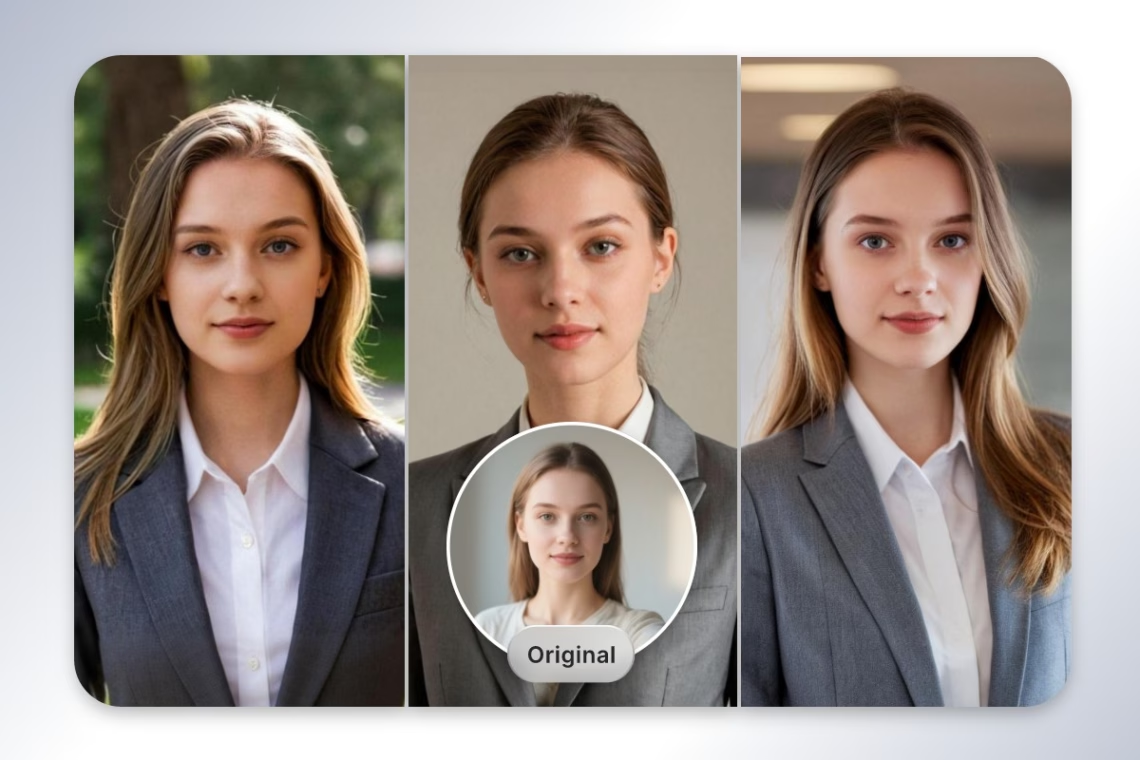
The Rise of the “Synthetic” Headshot
One of the most immediate casualties is the traditional headshot. AI generators allow users to create professional-grade portraits featuring:
-
Virtual Wardrobes: Clothing the user doesn’t actually own.
-
Impossible Locations: Settings the user has never visited.
-
Cost Efficiency: “Profile Bakery” claims that 92% of people cannot distinguish their AI headshots from real photos.
“If you’re struggling with a budget, one of the first places people look is how to get it done the cheapest,” says George Mason University professor Stephanie Benassi.
Stock Photography’s New Reality
The stock industry is facing a total overhaul. Benassi notes that a majority of new food stock images are already AI-generated. While major brands like Nike or Apple will likely continue to demand “authentic” imagery for high-stakes campaigns, these elite gigs will likely be reserved for veteran photographers, leaving entry-level shooters with a shrinking pool of opportunities.
The Counter-Argument: The “Soul” of the Image
Despite the efficiency of machines, there is a growing movement toward radical authenticity. Naeem Mohaiemen of Columbia University argues that a machine produces “polished surfaces and nil soul.” He believes human creativity thrives on the very variations and errors AI seeks to smooth out.
-
The Untouchables: Certain sectors, such as wedding photography and photojournalism, remain resistant. Outlets like Getty Images and various news organizations have already banned AI-generated content to preserve editorial integrity.
The Silver Lining
It isn’t all gloom for the industry. Many photographers are adopting AI as a “superpower” rather than a replacement. Current tools are being used to:
-
Accelerate Post-Production: Drastically reducing time spent on tedious retouching.
-
Smart Culling: Using AI to identify and categorize the best shots in a set of thousands.
-
File Management: Enhanced metadata and searchability for massive archives.
The Bottom Line
For businesses and consumers, the “good enough” threshold is shifting. When the goal is speed and low cost, AI wins. To survive, the modern photographer must offer the one thing a prompt can’t: a human connection.


You May Also Like
